Is Using AI Voice for Ads Risky for Your Brand?

The short answer is yes, and the data backs it up. Using AI voice in advertising carries real brand risk, and that risk is growing as audiences get better at detecting it. Here's what the research shows, what's happened to brands that found out the hard way, and why the cost argument for AI voice doesn't hold up the way people think it does.
What the Data Actually Says
The numbers on consumer trust and AI voice in advertising are not ambiguous. According to a 2026 Adobe Express survey, 77% of consumers trust human voices most, and 58% say they would trust a brand less if it used AI-generated voices in ads.
The damage isn't just to perception. 52% of consumers say they would stop buying from a brand after an inauthentic experience, per Klaviyo and Emplifi data.
The gap between what ad executives think and what consumers actually feel makes this worse. According to IAB research, the perception gap between advertisers and consumers around AI ads grew from 32 points in 2024 to 37 points in 2026. The people making the decisions are getting more wrong about their audiences over time, not less.
What Happened to the Brands That Tried It
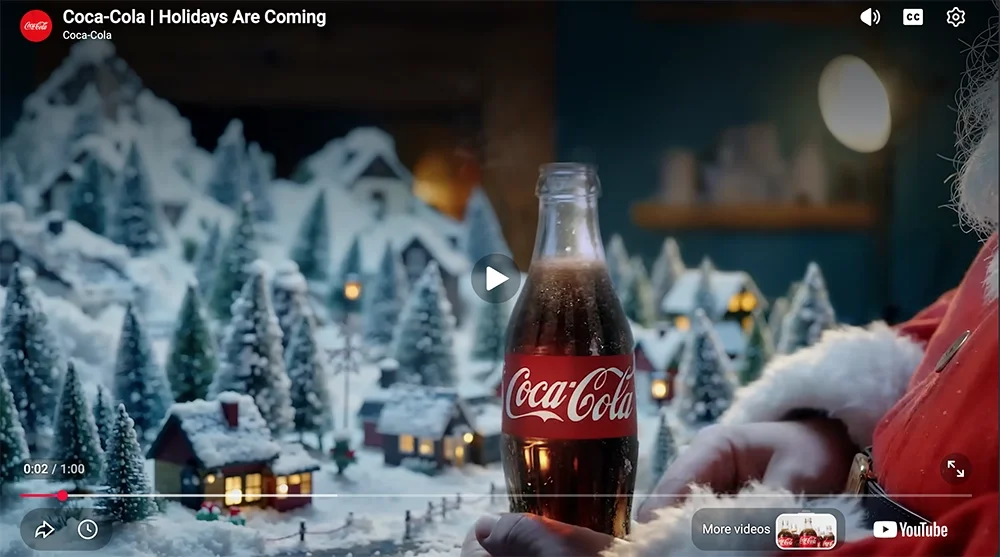
The high-profile cases are instructive. Coca-Cola's 2024 AI-generated holiday commercial became an inflection point where mainstream audiences started pushing back loudly. The result was technically competent but emotionally hollow. Characters appeared artificial, the visuals felt soulless, and social media lit up with criticism. What made it particularly notable was that this came from a brand known for emotionally resonant holiday advertising. When a company famous for making people feel things produces something that makes them feel nothing, the gap is impossible to ignore.
McDonald's Netherlands canceled an AI-generated holiday advertisement after audience feedback described the unnatural rendition as "creepy" and lacking the emotional depth associated with the season.
These failures share a common thread: high-emotion moments exposed AI missteps, as audiences quickly sensed when automation replaced genuine human connection. Short-term production savings unraveled once brands faced takedowns, negative press cycles, and longer-term reputational damage.
The Industries Where the Risk Is Highest
Not all categories carry equal risk, but some have almost no margin for error. Financial services, pharmaceutical brands, legal services, and political advertising are the sectors where a misstep with AI voice carries the most reputational risk. For pharmaceutical and medical content specifically, what medical voiceover actually requires goes well beyond just the voice. An AI voice detected in an ad for a bank, a medication, or a law firm signals something damaging, that the brand is cutting corners on the communication it uses to earn your confidence.

Why Larger Brands Have No Excuse
When Coca-Cola runs an AI ad, the obvious question is why. They have the budget. They have production resources. Choosing AI voice when you can clearly afford human talent reads as a deliberate decision to prioritize efficiency over the audience, and consumers recognize it as exactly that.
For smaller and regional brands, the calculus feels different because budget is genuinely tighter. But the risk to brand trust is the same regardless of company size. And the cost argument falls apart when you look at it clearly. If you're spending $3,000 on paid media to run an ad, the voice talent is a small fraction of that total investment. Spending $30 on an AI voice to save money on a $3,000 campaign and losing audience trust in the process is not a good trade. The human voice costs less than most brands think, and it protects the return on everything else you're spending. For what human voice talent actually costs for an ad and how it compares to the alternatives, that post covers the math.
The Harder Problem With AI Voice
Beyond trust, there's a practical problem that doesn't get talked about enough. Getting AI to read a line the way you actually want it is harder than it sounds. You end up spending credits and significant time trying to coax a specific intonation out of a system that can't interpret what you're describing. A professional voice actor in a directed session gets there in two takes. The time savings from AI voice often disappear in the revision process. For the full breakdown of what a human voice can do that AI still can't, including pattern, intonation, and specialized content, that covers it in detail. For a deeper look at why AI voice struggles with intonation regardless of how you frame the direction, that post covers the full picture.
Human voice talent is also easier to direct. You can describe the feeling you want, share a reference clip, and have a conversation. The talent responds.
The Case for Human Voice in Thirty Seconds
Using a real human voice supports human creativity in an industry that depends on it. It's faster to direct than AI. You'll spend less time getting it right. And a well-cast human voice makes your brand sound exactly like what it's supposed to be. For what to look for in voice talent for commercial ads and marketing, that covers the qualities worth prioritizing.
Dove pledged in 2025 to never replace people with AI in advertising, and brands running explicitly anti-AI campaigns in early 2026 made that position pay off. The brands leaning into human authenticity are making a calculated bet that their audiences will reward it. The data suggests they're right!